Skip to content

MD Crackower

Author, Scholar and Book Reviewer

  • Books
  • My Writing
    • Blog
    • Newsletter
    • Book Reviews
  • Blog Reading Challenge
  • Press
  • Resources
  • About the Author

An ongoing notebook

Essays

On reading, writing, and the patience of long sentences. New each Thursday.
All The Reading LifeThe Writing Life

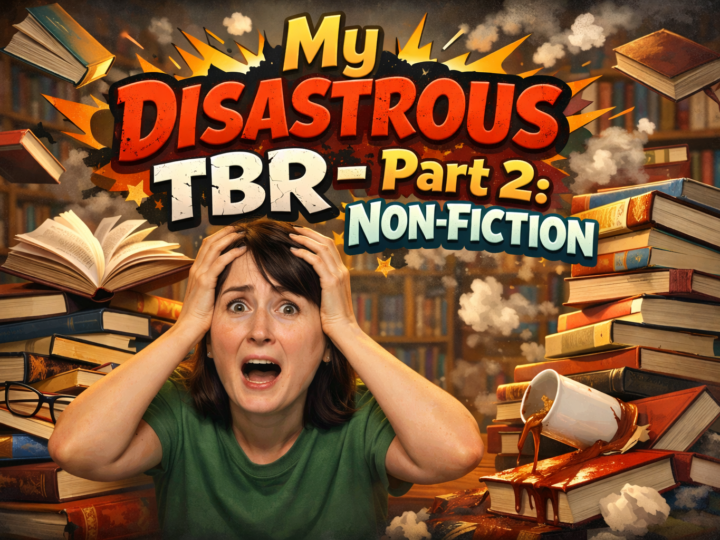
My Desastrous TBR Part 2: Nonfiction

THE READING LIFE · 3 MIN READ · August 15, 2026

To watch the corresponding video on YouTube, please, click on the link below:

My TBR Part 2: Nonfiction: https://youtu.be/F1d12XxQ8ww

After the disastrous pile last week, I went to the arts-and-crafts stores, bought a set of blocks and some stickers, and created a reminder that will stand on my shelves. I also tasked my daughter with preventing me from buying books, a job she takes joy in. But this won’t be sufficient. Last week, I went and bought 3 more books, which must add to the total number of books. So I will write down some ideas below, after listing my non-fiction books.

In this blog, I continue exploring my disastrous TBR shelf, but this time focusing entirely on non-fiction books. Like many readers, I keep discovering fascinating books faster than I can read them. Over time, this has created a growing To-Be-Read pile filled with subjects that reflect my curiosity and interests—from literature and theology to science, history, and even tea. In this video, I walk through the non-fiction books currently waiting on my shelves, talk about why I bought them, and which ones I hope to read soon. If you enjoy BookTube, reading life videos, and personal library tours, you might discover some new titles to add to your own TBR.

Biographies:

  • Liszt
  • Mozart
  • Beethoven
  • Bach and God
  • Bach, the learned musician
  • Music in the castle of heaven
  • Agatha Christie
  • CS Lewis
  • JRR Tolkien
  • Leonardo da Vinci
  • Leonardo’s notebooks
  • Churchill
  • Churchill
  • Ernest Hemingway
  • Papa Hemingway
  • Van Gogh
  • Marie-Antoinette
  • Marie-Antoinette’s diary/letters
  • Duty and destiny
  • Napoléon
  • Paul

Letters

  • Liszt and Wagner
  • Liszt et d’Agoult
  • JRR Tolkien’s
  • Mémorial de Sainte-Hélène
  • Letters of Mozart and his family

Jane Austen

  • A life
  • JA’s notebooks
  • JA’s letters
  • JA’s bookshelf
  • The real Jane Austen
  • JA’s wardrobe
  • The worlds of JA

Entertainment:

  • The Star Wars Archives
  • A start wars bestiary
  • Film scoring
  • Treatise of Harmony by Rameau
  • First nights at the opera

Art:

  • Monet
  • Impressionism
  • Paul Cézanne
  • Leonardo
  • Impressionism
  • In Montmartre
  • The Creative Act
  • Louvre
  • Waterliles
  • The Louvre, all the paintings

Tea:

  • Tea
  • The art and craft of tea
  • A history of tea

Flowers and gardening

  • Lavender
  • The lavender companion
  • Vintage roses
  • Vegetables, herbs, and fruits
  • The way of the wild flower
  • Country commonplace book
  • 1519 gardening secrets
  • Grow food for free
  • Tulips

History

  • Ancient cities
  • President’s club
  • Assyria
  • Persians
  • Templars
  • Jerusalem
  • When the king took flight
  • Jerusalem
  • Under the black flag
  • The manuscripts club

Science

  • The night sky of North America

Literary Criticism

  • Orientalism

Productivity

  • So good they can’t ignore you
  • Deep work

Theology

  • Gold’s crime scene
  • Dieu, la science, les preuves
  • World changers
  • Rediscovering Israel
  • The case for faith
  • The case for a creator
  • Seeing the supernatural
  • The atonement
  • Paul and Nero
  • The attributes of God, vol 2
  • The life of Paul
  • Rose’s Guide to the epistles
  • Rose’s Guide to the Book of acts
  • Bible facts
  • Biblical geography
  • Rose Guide to the temple

Nature: 

  • Dans la peau d’un arbre
  • H is for Hawk
  • Leave only footprints
  • A walk in the park
  • The backyard bird chronicles
  • Wolves 
  • Aux sources du Nil
  • L’émeraude des Garamantes
  • Northland
  • The road to little Dribblings

We come to a total of 189 books combining fiction and non-fiction. About 10% of the books I have in my collection. Maybe it’s not that bad… Are TBR proportional to the size of a library?

My Desastrous TBR- Fiction

THE READING LIFE · 4 MIN READ · August 15, 2026

To watch the corresponding videos on YouTube, please click on the links below:

Part 1: Fiction: https://youtu.be/5FES66bhrNU

In this blog post, I examine one of the most dangerous places in any reader’s life: the TBR shelf (also known as the TBR pile). Like many book lovers, I keep acquiring wonderful books faster than I can read them. Over time, this has created what I can only describe as a disastrous TBR — a growing collection of books patiently waiting on my shelves to share their knowledge. One of my odd habits is that I don’t like to have unread books on my shelves. It does not bother me when it comes to other people’s libraries, but it bogues me here in my house.

Why do I have a TBR in the first place? Why not buy as I finish them? Do you experience the same thing? I used to not be like that. 5 years ago, my TBR counted 17 books. Today, as I wrap up the count, I have 86 novels and works of fiction so far. So, I hope writing this blog and filming the corresponding video will cause a wake-up call in me as to not purchase books anymore but read from my shelves.

Why don’t I read them? How did I get to such a big TBR pile? I see many reasons: 

  1. I keep buying books-my fault
  2. People keep offering me books- partly my fault, especially if they were on my Christmas list.
  3. I don’t have as much time to read.
  4. I have a bad perception of time
  5. I am older and read more slowly
  6. I want to take note, and it slows my reading.
  7. I spend my evenings watching videos on YouTube of people talking about books, and it makes me want to buy their recommendations (i.e. Brandon Sanderson)
  8. I have too mony projects going on at the same time and I get overwhelmed.

I am currently reading 10 books: 2 for work, 2 as research basis for the next book I plan to write this year (the outline is done, yay!), one is a devotional about classical music, one is on World War II history, and 1 by Esope, 1 audiobook. Plus, The New Testament in Its World and Unlocking the Bible (however, I do not read these books cover to cover, I read the chapters related to what I am currently reading/studying in the Bible. I keep a photocopy of the table of Contents and highlight things as I go)

As I went through the fiction books from my TBR, it includes: 

Classics:

  • War and Peace, vol 1 and 2
  • Jane Eyre
  • The Empress of Ireland
  • Crime and Punishment
  • Le chercheur d’or
  • The Scarlet letter
  • A tale of two cities
  • Arabella 
  • Middlemarch
  • Great expectations
  • A little princess
  • Robin Hood
  • The wind in the willows
  • The Wizard of Oz
  • Le morte d’Arthur
  • The odyssey
  • Anderson’s fairy tales
  • Grimm’s fairy tales
  • Just so stories
  • Greek myths
  • Beowulf
  • La planète des singes
  • The pilgrim’s progress

Literary fiction: 

  • Du sang au paradis
  • Les 5 royaumes
  • Mythology
  • The little pilgrim’s progress
  • Shakespeare and Marlowe
  • Warriors 1
  • North or be eaten
  • Adventures in the wild
  • The poisoned king
  • Wings of fire vol 1
  • The adventures of Sophie Mouse
  • 12 books of How to train your dragon
  • Just find me
  • L’année des hyènes
  • Before we say goodbye
  • Before we forget kindness
  • Chloe’s trip to the future
  • The science of Discworld
  • Nestor Burma: 11 novels in one book…
  • Diary of a provincial lady
  • The return of the shadow
  • The treson of Isengard
  • The war of the ring
  • Sauron defeated

Authors whose works I return to year after year:

Guillaume Musso:

  • Angélique
  • Un appartement à Paris
  • L’inconnue de la Seine
  • La jeune fille et la nuit
  • La vie est un roman

Marc Levy:

  • The bookstore of the forbidden books
  • Noa
  • Le crépuscule des fauves
  • It happened one night
  • La symphonie des monstres

Christian Jacq:

  • Sinouhé l’Egyptien

Patrick Modiano:

  • None right now

Ernest Hemingway:

  • For whom the bell tolls

Amélie Nothomb: 

  • None right now

Paulo Coelho

  • None right now

Some of these books have been sitting on my shelves for a long time, while others are more recent additions. 

In a nutshell, that’s too much. I should not have more than 2 books on my coffee table at once (not including the audiobook and the 2 I have only partially read), especially if I want to take notes and write an entry in my reading journal.

Do you have a TBR pile that keeps growing? Why could be the causes of this growing TBR pile? Or maybe you are a collector. What fiction book has been sitting on your shelf the longest? 

My Cookbook Collection: Are Cookbooks Books or Tools?

THE READING LIFE · 4 MIN READ · August 15, 2026

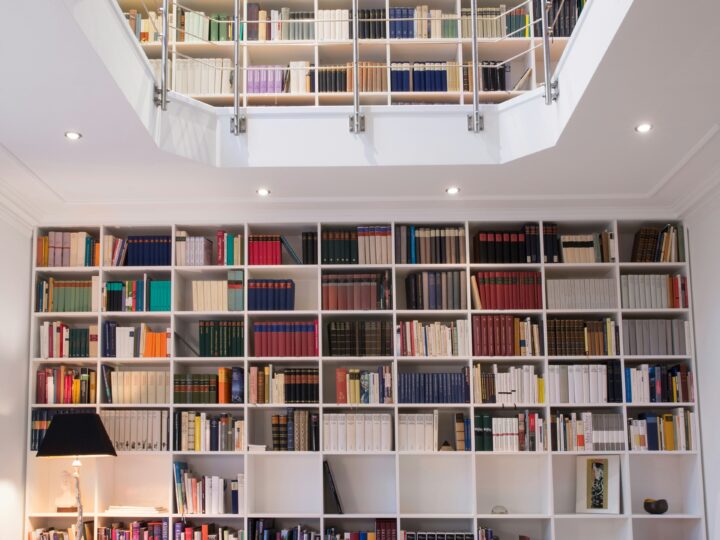
Photo by Dan Gold on Unsplash

I never really thought of cookbooks as books. That might sound odd; after all, they are bound, printed, and shelved like any other book. But I’ve always seen them more as tools than as traditional reading material. After all, I don’t read them cover to cover like I do for the other books on my shelves.

Yet this morning, as I stood in front of my shelves, I realized something: they absolutely belong in my collection.

Even if I write in them, cook from them, highlight family favorites, and add notes in the margins — things I would never dream of doing in my other books — they are still, without a doubt, books.

So what can I say about my cookbook collection?

Like the rest of my library, it is organized by theme, geography, and in space.

The Top Shelf

On the top shelf, desserts occupy one side, and two cholesterol-diet books stand on the other — you know, to keep things balanced. In the middle sits a Christmas cactus (which, for mysterious reasons, has never bloomed).

There are books devoted entirely to cookies and macarons, two juicing and smoothie guides, and Paula Deen’s children’s cookbook — signed by the author… and by its original owner (when she was three).

The Second Shelf

The second shelf features my Pioneer Woman collection. I own four of her books. I must confess: I have never cooked from them. They are beautiful, though. I really should try.

One of them — the blue holiday edition — covers nearly every American holiday imaginable.

Next to them sit two French cookbooks. One is Je sais cuisiner by Ginette Mathiot, a classic that has graced bookstore shelves since the 1970s. My mother learned to cook from that book when she first got married. I brought my copy with me — but I rarely used it here, since all the measurements are in metric: centiliters and degrees Celsius. Last Christmas, however, I was fortunate enough to find an American edition published by Phaidon. I bought it immediately and plan to use it this year.

Following those are my thematic cookbooks: three Downton Abbey volumes and four Disney-inspired books (Star Wars: The Life Day Cookbook, Lilo & Stitch, and The Disney Parks Official Cookbook).

Then come the appliance-focused books: slow cooker, pressure cooker, sous vide, and air fryer, which I use all the time. Some will say, this is not ‘real’ cooking. Considering I had no clue how to cook when I got married (how did I survive until then? I know not), they are for me because they taught me to put good, tasty food on the table.

I will add that the simple fact that my daughter told me two days ago, “I love your cooking,” is big. She is eight and eats curry, corned beef, stews, rice and gravy. I owe it all to these books. They are part of what makes our family. They bring us together around the table to share a meal.

The Bottom Shelf

The last shelf is more eclectic.

Here you’ll find Cajun staples like Talk About Good I and II — essential references published by the local Junior League. There are several more French cookbooks (perhaps I should group them together?), including the famous Mastering the Art of French Cooking.

There’s an Asian cuisine book — I discovered Korean food last year at my piano teacher’s house and fell in love with it — a Jewish cookbook with a tasty onion brisket recipe, a Christmas cookbook I rarely use, and One Pot Dinners, where I found the best lemon chicken drumstick recipe.

A couple of binders sit there as well — practical, unglamorous, but necessary.

So, what should I conclude?

Do I treat my cookbooks the same way I treat the other books in this house?

It seems that I do.

After all, cookbooks tell stories, too. Family stories. They carry memories of mothers teaching daughters, of holidays around a table, of new cuisines discovered unexpectedly. Perhaps that is why they belong on my shelves after all.

They are organized, carefully selected, and neatly arranged. They reflect what I value, what I want to learn, and what I enjoy.

The only difference? I write in some of them. (Never the hardcovers.)

And you?

Where do you keep your cookbooks?
Do you think of them as a collection, a series, or simply tools?
What do you like to cook, and how do you choose your books?

Tell me in the comments, and I’ll see you soon for more book talks.

Where We Read

THE READING LIFE · 4 MIN READ · August 15, 2026

Do you pull out a book every time you find yourself waiting in line, or do you prefer to wait until you’re back home to read? The question of where we read is interesting. It raises the idea of how we conceive the act of reading: is it just a way to spend time or to find ourselves all over again and regroup after a long day? Are the places where we read an expression of our identity as a reader? Do they illustrate what kind of readers we are? Reading requires specific settings and absolute concentration.

We cannot read while driving or walking. That would be dangerous. Reading is a selfish activity because it requires very few to no distractions. It’s a work of the spirit and the imagination, two sides of the mind. I see two kinds of reading settings:

  1. The Everywhere Reader:

The Everywhere reader will read, well… everywhere” on a train, a plane, a car, in bed, by the pool, over lunch, at the gym. For the Everywhere reader, books are part of everyday activities and a way to occupy idle time. The Everywhere reader usually carries a book in a bag and rarely leaves the house without some reading material handy.

  • The Geographically Specialized Reader

The specialized reader has a spot to read in the house—a comfortable chair in a corner with special lighting, and a sofa. For the specialized reader, reading is an isolation activity. “I am going to my nook, don’t disturb me for the next hour or so”. When the Specialized reader is sitting in that chair, everyone knows that there is an invisible but very present “Do not disturb” sign hanging over. The specialized reader also set a time along with a spot, carefully selected and preserved for that use. 

  1. The Librocubicularist

from the Latin liber (book) and cubiculum (bedroom). This is a specialized reader who loves to read in bed. The librocubicularist usually has a pile of bedside table books piling up within arm’s reach from the bed. Reading is a relaxation activity that creates a calming environment conducive to a good night’s sleep. According to the Merriam-Webster Dictionary, the term was created by Christopher Morley, American author of The Haunted Bookshop, published in 1919.

  • The Transportation Reader, aka Book-bosomed Reader

We see them sitting at airports when everyone else is rushing between planes or busy shopping at the Duty Free shops. The transportation reader uses idle time to isolate themselves from the business and the stress of transportation. The book-bosomed reader always has a book handy in the purse and does not leave the house without some reading material. 

I am an Everywhere reader. On Saturday mornings, when we go to the gym, I bring a book because I know I will read a few pages while riding a bike. Although there are TVs everywhere around, I prefer the silent company of a book to that of the depressing news or mindless TV shows. I love to read at coffee shops too. I find the energy dispensed by the surrounding activities invigorating: the conversations, the music. Most of the time, noise does not bother me. I am out of the house, away from chores, and the signal that the drying is done. On a long car ride: traveling to New Orleans or Destin. FL? That’s at least three hours sitting in one spot, I can use for good. There is no writing possible in the car, and I don’t get car sick. I also have a reading chair in my office that I carefully selected. 

And you? What type of reader are you? Do you find yourselves packing more books than reason calls just in case? Or do you keep them neatly stacked on your bedside table?

I Have a Book Problem

THE READING LIFE · 4 MIN READ · August 15, 2026

Photo by Ed Robertson on Unsplash

Yes, I have a book problem. Actually, I have two problems. It would not be so bad if they were not conflicting with each other like two dogs in a bag trying to escape! People who know me will tell you that I have a slightly quirky approach to books. My biggest concern is probably that I don’t like having books on my shelves that I haven’t read. It does not bother me when it comes to other people’s bookshelves. But it bugs me when I look at my library. A lot. Maybe that’s why I keep my unread book in a separate TBR pile on the floor in my office. I am not referring to dictionaries, encyclopedias, and other similar books, nor collectible books or ancient editions. I am referring to the regular fiction and non-fiction books I purchase at the bookstore. 

Talking about buying books raises the second issue. I enjoy purchasing books that interest me and that I hope to read soon. That’s fine with me; I’m not going into debt for it. However, this “hobby” has left me with about 192 unread books that are bugging me! I made the list last year and, as I was adding title after title to it, I began to wonder: “How did that happen?”, “How did I fall into such book oblivion?” I am not usually an impulsive buyer, except when it comes to books. So, in 2025, I decided it was time to act on this problem, and I made a few decisions to at least partially resolve the dilemma: First, I reduced the number of trips to the bookstore. I used to go every Friday, before picking up my daughter at the bus, it was a way to unwind and unplug. 

Second, I hired a conscience. My daughter has been telling me for a while now that I have too many unread books. She is right. So, every time I go to the bookstore, I task her to remind me of my large TBR piles in my office. Needless to say, she loves doing that and accomplishes her duty diligently!

Third, I set a number. There is no way I will remain without buying books until I have read everything, so I set the number 13 as my limit (because, at the time of this decision, I thought I had 133 books on my TBR. I later found out that the reality was different). I will buy a book every time I read 13 books from my TBR. I also enlisted my daughter to check on it regularly. With over 150 unread books, there’s no way I’ll read them all this year. Let’s face it, honestly. I don’t have the time, nor would I even want to do that. It would completely kill the joy of reading to turn it into a chore and an obligation. No way! Another number is 5. I will try to read five books a month, and possibly a sixth as a reread of a favorite book.

Fourth, I will shop from my TBR pile. Between nature writing, Young Adult, travel writings, history, biographies, letters, detective novels, and historical novels, I have a lot to choose from.

Fifth, should I set a reading calendar? I tried but failed. It changes the nature of reading to make it a task. So, no.

Sixth, I could read by themes: I have many books on Impressionist painting, creativity, and Marie-Antoinette. I could have a few weeks each year when I read everything I own on a particular topic.

And you? Do you have any quirks related to books or reading? How do you resolve them? 

Where We Write

THE WRITING LIFE · 3 MIN READ · May 14, 2025

Writing is a personal act. It’s a fight, a confrontation of the writer with the blank page. Often, this confrontation happens in the solitary confinement of an office, a library, a shack in the garden, or a cabin by a lake. It’s no secret, also, that writing is a solitary act. Until the work is published, we, authors, choose who will get the privilege of access to the pages that sprung one morning or one night from our imagination. We are very selective of who will see the words and hear the rhythm of the sentences. We are very protective of our creation, our literary baby.

Most authors write in isolation. George Simenon barricaded himself in his office and would barely come put until the work was complete. Jane Austen wrote at a tiny desk near a fireplace and by a window in the Dining Parlor of the cottage where she lived with her sister. Neil Gaiman told Tim Ferriss that his favorite place to write is in a cabin in his backyard.

However, for me, it’s different. Yes, I have my own place at home, my office, or study with a plain desk and surrounded by books. However, most of my writing, either academic or creative, is done on Friday mornings at a local CC’s, a coffee shop. There, I sit, always at the same table; a cup of Earl Grey is steeping on the left side of my table, and a croissant is waiting to be eaten on the opposite side. This is where I have my Friday morning breakfast, where I sit for three hours straight, a block of lined paper, a pencil case, notebooks and a computer are all I need. It’s a unique and inspiring setting that fuels my creativity.

The noise does not bother me. It’s rhythmic, it’s life. It invigorates me.

The other customers don’t bother me: they create in conversation, produce, and develop. They are focused, so I become more focused, too.

The smell of freshly baked coffee and pastries enhances my senses, even if I don’t drink coffee. They are my “Proust’s madeleine.”

Here, I don’t know anyone. The baristas know my face and greet me with a smile. They are familiar with my habits, but they don’t know who I am.

I isolate myself in the crowd.

Am I an anomaly in the crowd of authors?

Not at all.

J. K. Rowling wrote her first Harry Potter book at the Elephant House in Edinburgh. Ernest Hemingway penned much of A Moveable Feast at the café La Closerie des Lilas in Montparnasse, Paris. Malcolm Gladwell also mentions the benefits of being a regular at coffee shops.

I opened this article by stating that writing is a personal act; the choice of a setting is, too. Where do you write? Are you a coffee shop writer, a cabin in the woods, or a hybrid?

Let me know in the comments below.

Whatever the setting, there is no wrong place to write. It’s about finding what works best for you and your creative process.

The Table Where I write at CC’s in River Ranch.

M. D. Crackower is the author of “Strategy: A Divine Blueprint for Spiritual Battles”. Available on Amazon.com.

I

  • « Previous Page
  • 1
  • 2
  • 3
  • Next Page »
MD CRACKOWER

Author · Scholar · Book Reviewer

Navigate

  • Books
  • Blog
  • Book Reviews
  • Blog Reading Challenge
  • Press
  • Resources
  • About the Author
  • Contact

The Newsletter

A weekly letter on reading and writing.

© MMXXVI · MD Crackower EST. 2026 · GENESIS · WORDPRESS

Copyright © 2026 · MD Crackower 2026 on Genesis Framework · WordPress · Log in